
EDITOR: RISE
What should a city sound like when car traffic is no longer the dominant presence? As part of an EU-funded research project on reducing car dependence and enabling 15-minute cities, researchers at RISE began exploring this question through sound. Together with sound artist and musician Richard Widerberg, they invited citizens, city representatives and researchers to listen closely to their urban soundscapes and imagine how these could change.
Walking the city by ear
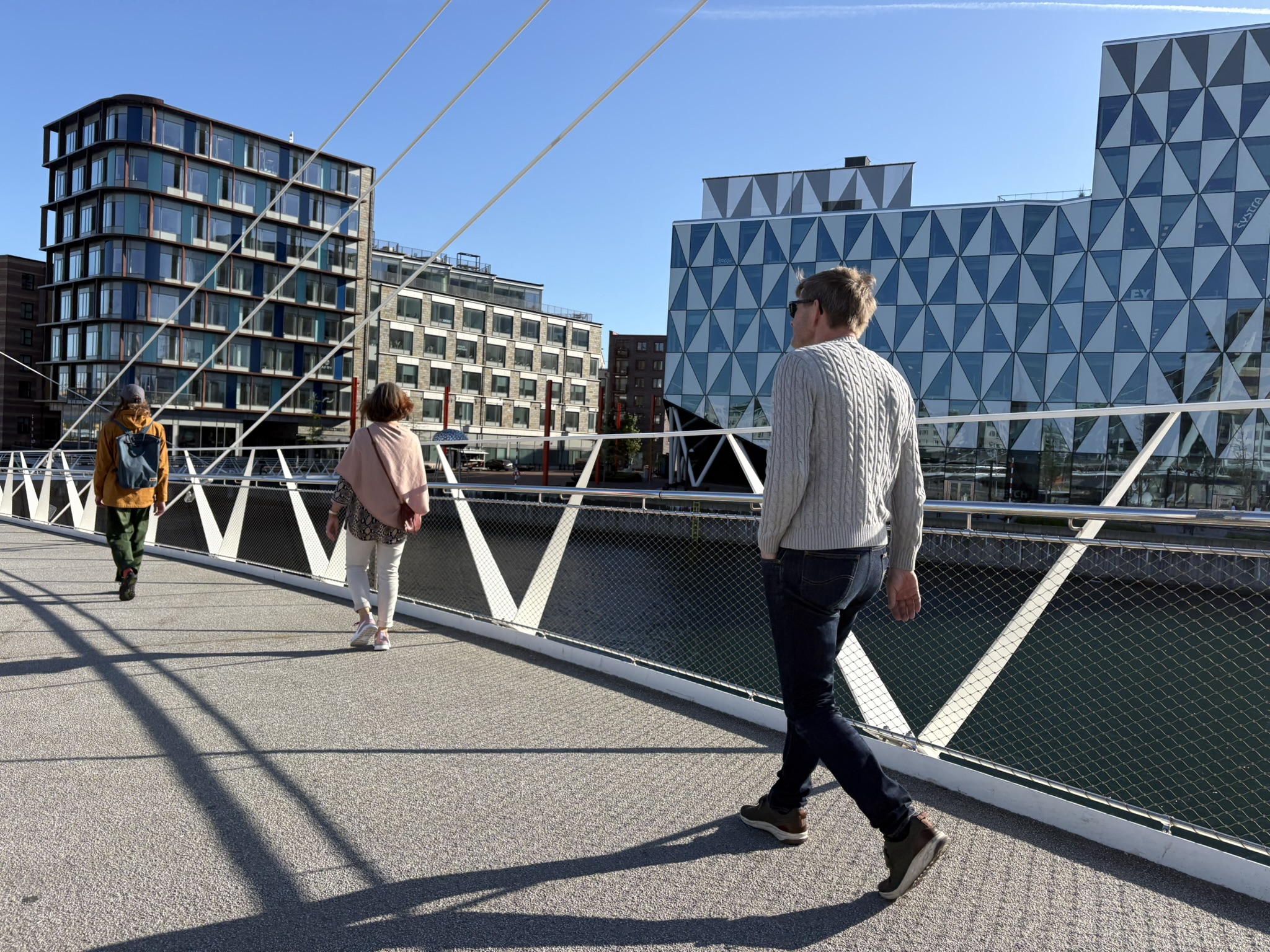
The collaboration began in Helsingborg during the project’s kick-off meeting. Richard Widerberg led a public soundwalk with researchers and residents. He had carefully mapped a route through the city that moved between busy intersections, quiet back streets and both indoor and outdoor environments. Participants walked in silence behind him, with one simple instruction. Pay attention to what you hear and to how it makes you feel.
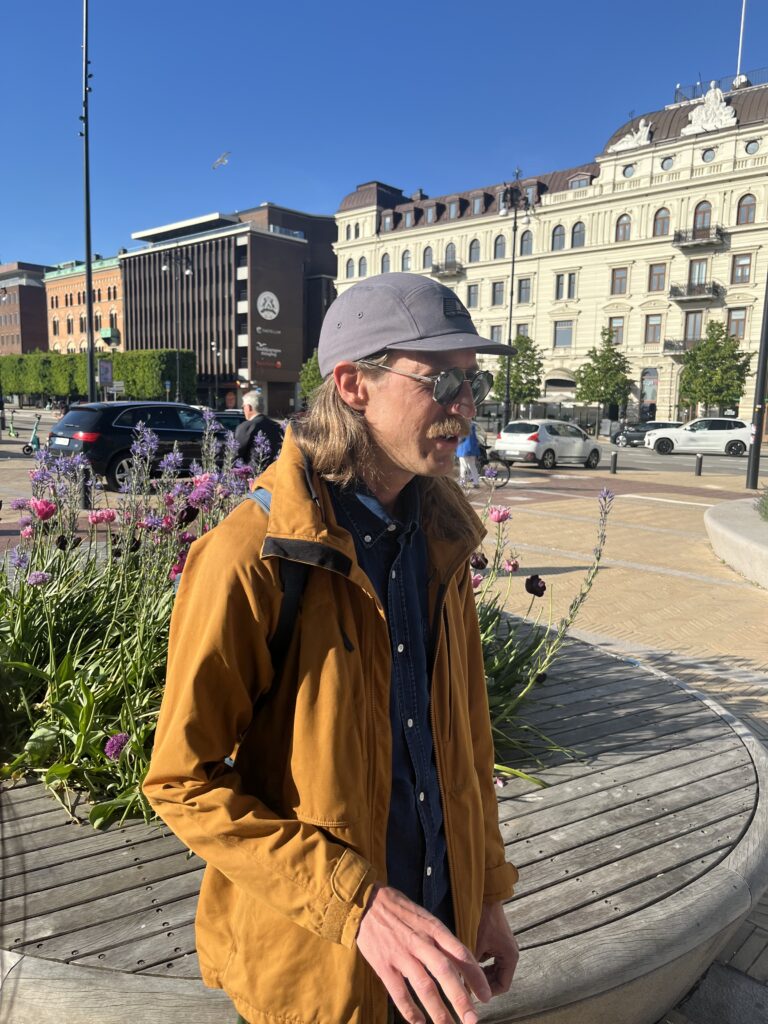
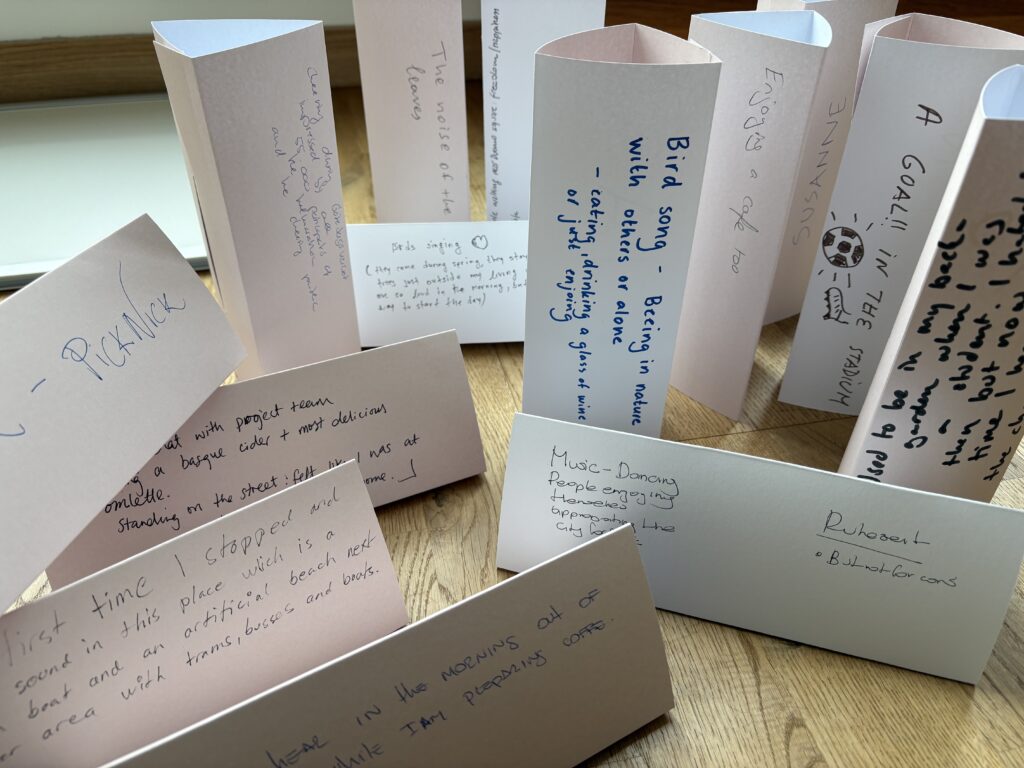
At first, many noticed only the obvious layers of traffic and voices. As the walk continued, people described a shift in their perception. More and more sounds emerged, from ventilation systems to footsteps and snippets of conversation. The group finished at the harbour, standing still with closed eyes and listening to a soundscape that the artist had selected in advance. Afterwards, they gathered to discuss what they had experienced and to share memories of urban sounds from other cities and from different periods of their lives.
Art and science in collaboration
The second activity took place the following day with researchers and municipal representatives from several European cities. Before travelling, participants had been asked to record two sounds in their home city using their mobile phones. One sound they appreciated and wanted more of. One sound they found disturbing and would prefer to hear less often.
These recordings, played back in the workshop, became the basis for a collective reflection. Enjoyable sounds ranged from birdsong and harbour activity to lively public squares. Annoying sounds came mainly from road traffic, including constant background noise rather than only extreme peaks. For the sound artist, this material is linked to his long-term work with participatory sound exploration. For the researchers, it provided an embodied entry point into questions of mobility, health and urban form that are often treated primarily through maps and data.
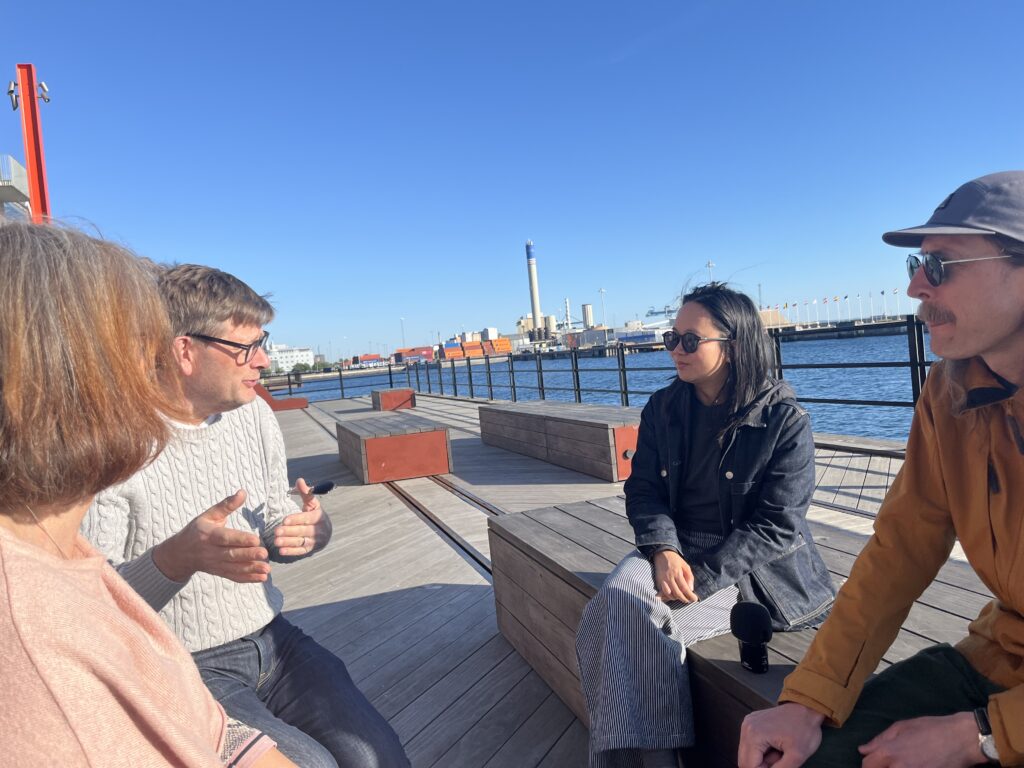
The collaboration illustrated how artistic methods can broaden participatory research. Instead of asking people abstract questions about noise or liveability, it invited them to listen, to notice and to articulate how sound shapes everyday experience in their streets and neighbourhoods.
What is emerging from the work
The soundwalk and the recording workshop generated insights that would have been difficult to reach without this artistic lens. Participants reported that they had rarely considered soundscapes as carefully before. Many realised how strongly traffic noise influences their sense of comfort or stress in public spaces. At the same time, the variety of appreciated sounds highlighted that cities are not meant to be silent, but to offer rich and diverse acoustic environments.
For the RISE team, the collaboration with Richard Widerberg has shifted how the broader research project approaches citizen engagement. Future activities will integrate sound and other senses more systematically, and will build on embodied exercises rather than relying solely on surveys or meetings in formal settings. The work also suggests that local sound artists, who often listen to cities with particular attention, can become important partners in urban transitions towards more liveable environments.
The results of this first exploration will feed into ongoing project work on 15-minute cities, and further experiments with sound are already being planned. For more examples of how such collaborations evolve in different contexts, visit our Success Stories.