

EDITOR: GAIA Cluster
How do you draw attention to a mostly invisible world? In the Basque Soil Living Lab, this question led researchers, students and local partners to look down into the soil of the Urdaibai Biosphere Reserve, and then outward again through drawings, paintings and sound. The result is Mizelioa, an art and sound exhibition at DOCK Bilbao that invites visitors to listen differently to the ground beneath their feet.
From field visit to exhibition
Mizelioa grew out of a simple premise. If you want people to care about soil biodiversity you need to offer more than graphs and reports. Together with GAIA, the University of the Basque Country (UPV/EHU), San Fidel Ikastola, and local authorities in Forua, the Living Lab designed a process that started outdoors in Urdaibai and concluded in an urban exhibition space in Bilbao.
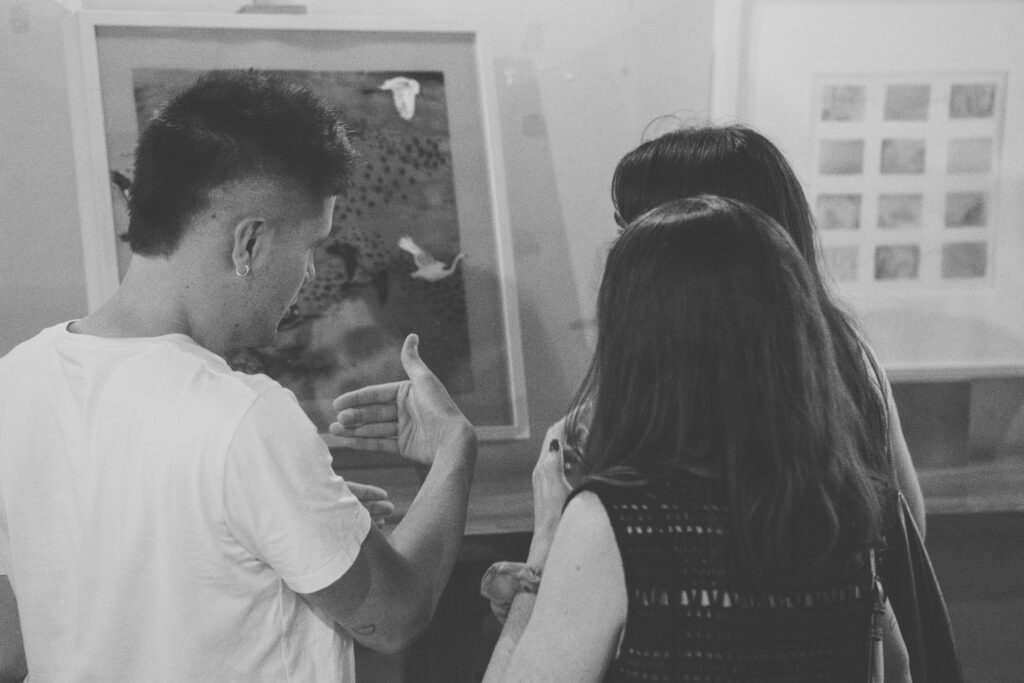
Fine Arts and Pedagogy students first travelled to Urdaibai to observe ecological indicators used in soil monitoring. Dragonflies over water, beetles in the undergrowth, butterflies and moths, migratory birds and traces of mycelium in the soil all became material for sketchbooks and sound recordings. Back in university studios, these notes evolved into a series of drawings, paintings and mixed media works, alongside a soundscape that weaves together field recordings from the reserve.
On 18 June 2025 the work moved into DOCK Bilbao. Mizelioa opened with short introductions to soil biodiversity and the Basque Soil Living Lab, followed by a conversation between scientists, local actors and the student artists. Visitors then walked through the exhibition, stopping at clusters of works that each took one indicator species or habitat fragment as a starting point, with the Urdaibai soundscape playing in the background.
Art and science in conversation
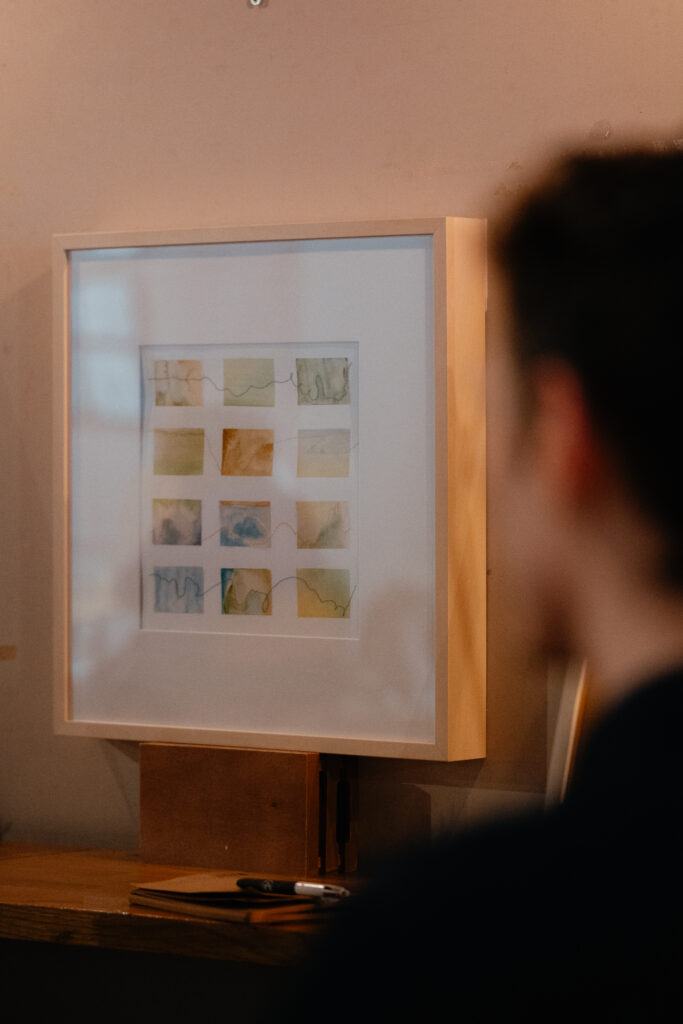
At the heart of Mizelioa lies an art-science collaboration. Soil experts and local partners from Urdaibai shared their indicators, stories and concerns with the students. Fine Arts students translated these into visual language, using formats from detailed anatomical studies of wings and shells to more abstract compositions that hint at migration, erosion or the slow work of mycelium networks. Pedagogy students, drawing on concepts from soundscape studies, composed an audio piece that shifts between birds, insects, water and human activity.
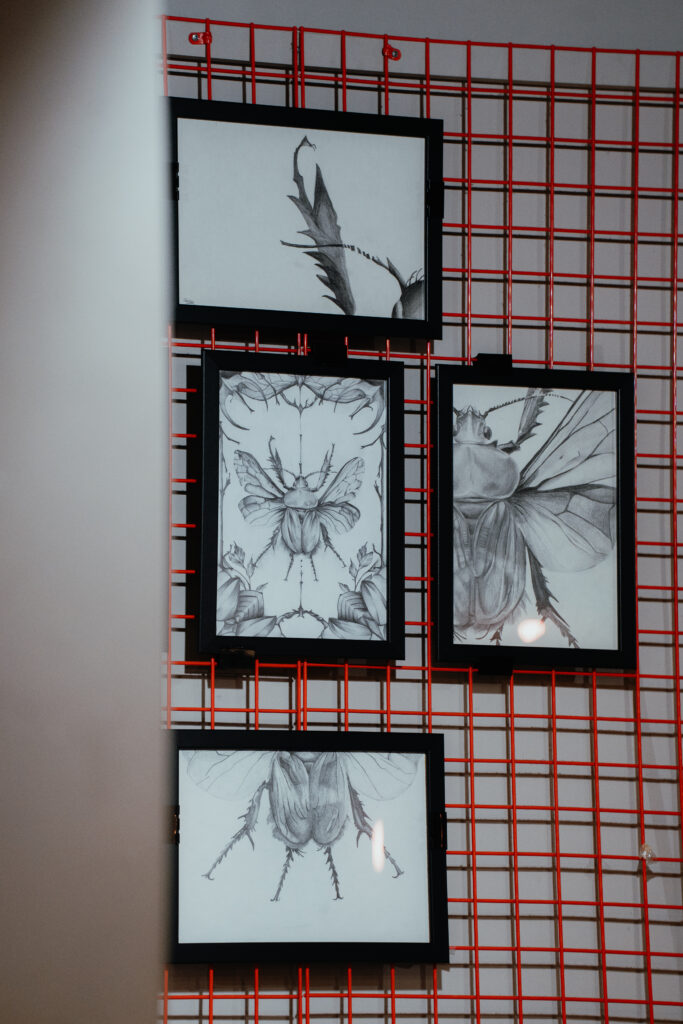
Rather than illustrating science in a literal way, the collaboration treated scientific indicators as a framework for exploration. Dragonflies become markers of water quality and balance, beetles signal the sensitivity of habitats, butterflies stand in for fragility and disappearance, and forest fragments suggest microhabitats in need of care. The process demanded constant dialogue so that the work remained scientifically grounded without losing artistic autonomy.
This constellation of actors GAIA, UPV/EHU, municipalities, schools, cultural organisations and students points to a Living Lab approach in which education, research and local policy feed into each other. The exhibition is one visible moment in a longer chain of fieldwork, teaching and community engagement around soil health.
What emerged and what is next
The impact of Mizelioa is tangible in the more than thirty artworks, the Urdaibai soundscape and the fanzine that documents the process. It is also evident in the reactions of those involved. Students report a different relationship to environmental issues once they have watched dragonflies as indicators rather than just motifs, or listened closely enough to record the changing sound of a wetland. Local partners describe the exhibition as a new way to give visibility to soil and biodiversity in Urdaibai and to bring these topics into conversation with citizens in Bilbao.
The exhibition opening drew around fifty participants, and the works remained on display for a month, attracting a wider public. Many visitors highlighted how the combination of images and sound helped them grasp soil as a living system rather than a static background. For the Living Lab, Mizelioa also strengthened ties between universities, municipalities and cultural actors and provided a template that can be adapted in other regions.
Mizelioa is part of a broader effort within InteractionSeeds to explore how artistic practices can deepen engagement with environmental transformation. Further stories from this and other collaborations will be shared in more detail soon. For more examples of how such interactions evolve in different contexts, visit our Success Stories.