

EDITOR: RISE
How can sustainable textile policy meet the everyday lives of young people? And what happens when second-hand clothes become material for experimentation rather than a last resort? In Norrköping, a collaborative workshop brought together design research, social work and fashion to explore how upcycling can support agency, creativity and more circular textile practices.
The workshop: Second-hand as material for experimentation
The starting point was the new EU textile waste regulation, which aims to reduce textile waste and strengthen reuse and recycling. Researchers at RISE wanted to relate these policy ambitions to young people’s lived experience and give them the chance to work directly with discarded garments.
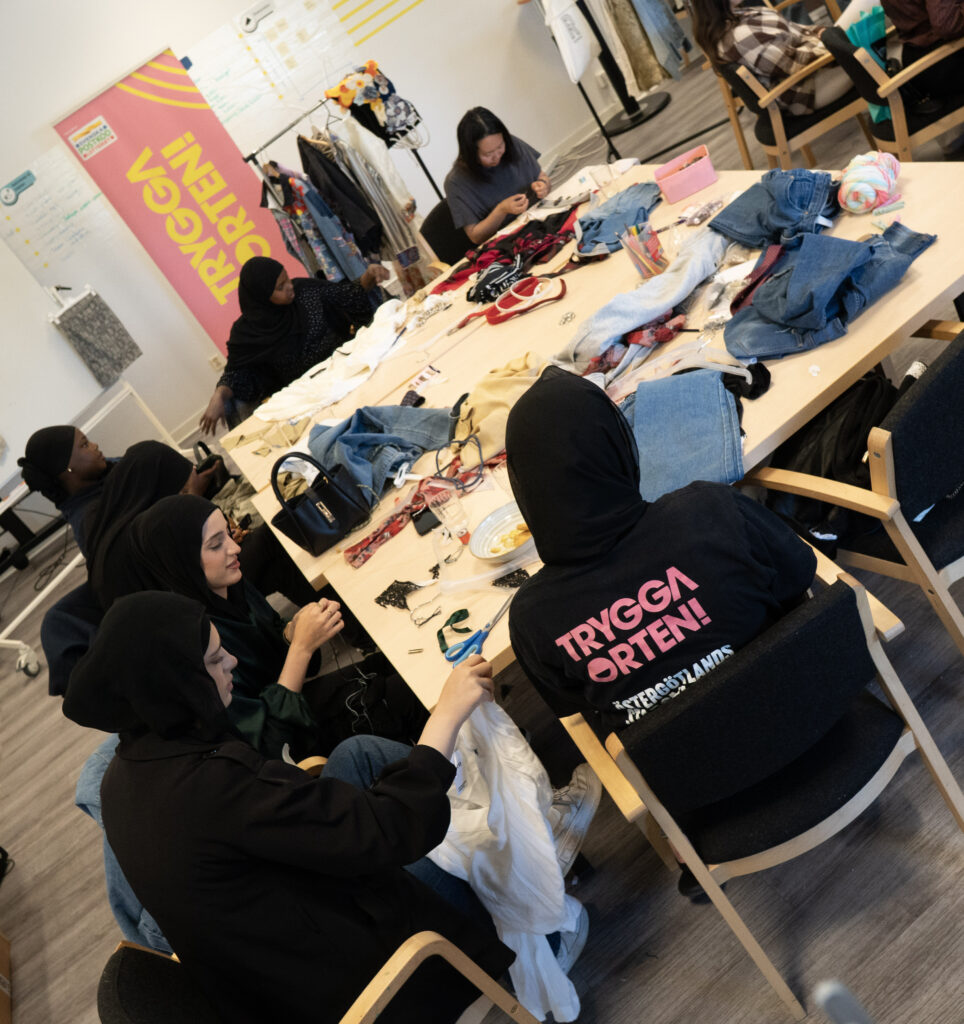
Together with Stadsmission, a Swedish social organisation with its own second-hand shops, they organised a hands-on workshop in a repurposed shopping centre in the Navesta district of Norrköping. Around twenty girls from the programme Power in da Hood turned the space into a temporary studio. Rails of second-hand clothing, tables full of jeans, shirts and jackets, plus threads, buttons, chains, textile paint and stencils invited them to cut, stitch, paint and reimagine.
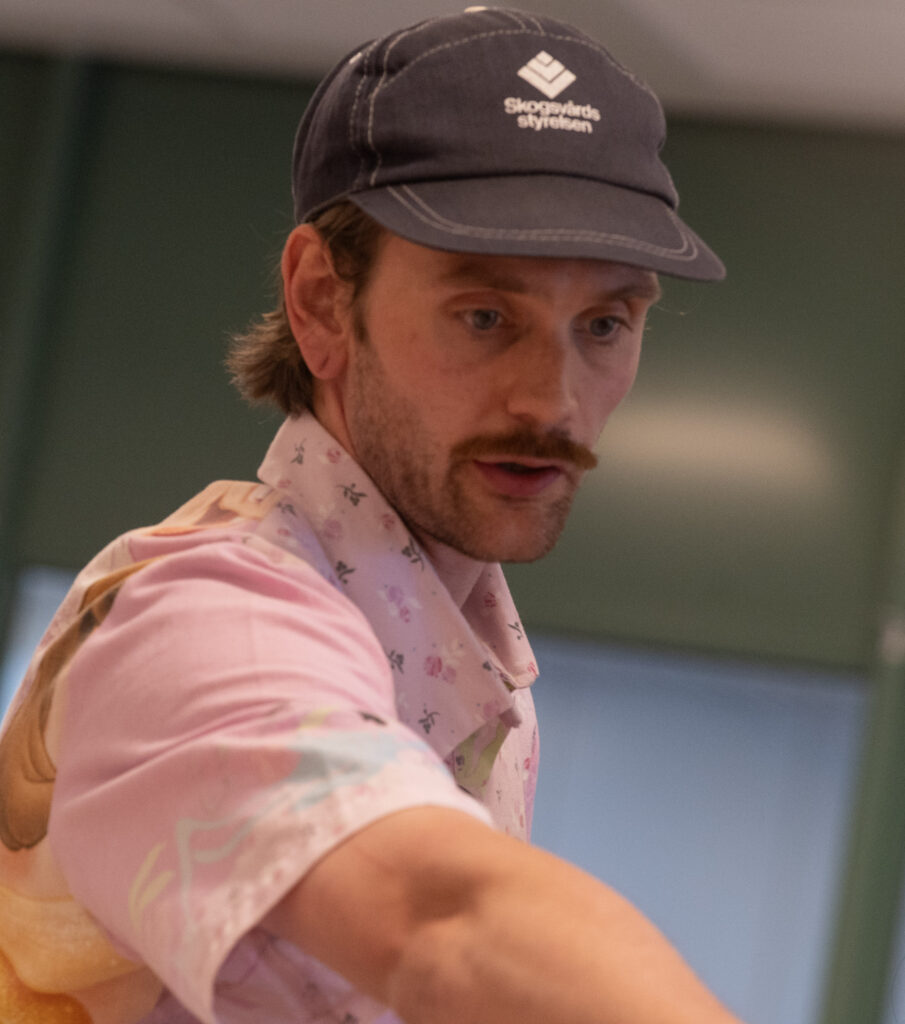
Designer Olle Bush, who collaborates with Stadsmission’s ReMake label, introduced simple techniques such as embroidery, painting and basic tailoring, then moved between the tables to support individual ideas. Many participants quickly developed their own concepts, from embroidered statements to radically altered silhouettes, and several asked for a continuation of the format.
Art and science in dialogue
The workshop was designed as a meeting point between artistic practice and research. The designer contributed his upcycling expertise and aesthetic sensibilities. Stadsmission provided access to textile flows, social infrastructure and long-term work with young people. The RISE team treated the workshop as a research setting to observe how attitudes towards second-hand clothing might shift when participants gain hands-on experience and creative control.
In this way, the collaboration linked the abstract language of EU textile regulation to specific neighbourhoods, bodies and styles. Rather than discussing sustainability in general terms, the workshop asked how clothing can carry stories of belonging, resilience and care when it is reworked by those who wear it.
Outcomes and what comes next
The most immediate results are visible in the garments themselves: jeans personalised with names, shirts transformed with trims and chains, jackets turned into one-off pieces with textile paint and stencils. Some participants took tools and materials home, while a shared box with basic equipment remains in their community space to support further experiments.
Beyond these tangible objects, the workshop opened up new questions and ambitions. Several girls expressed interest in learning more advanced techniques, including machine sewing, and some began to imagine futures in fashion or design. Stadsmission and RISE are exploring ways to deepen their collaboration in upcoming research projects on sustainable textile futures, and Power in da Hood is producing a short film to share the experience with other communities.
For more examples of how such formats evolve in different contexts, visit our Success Stories.