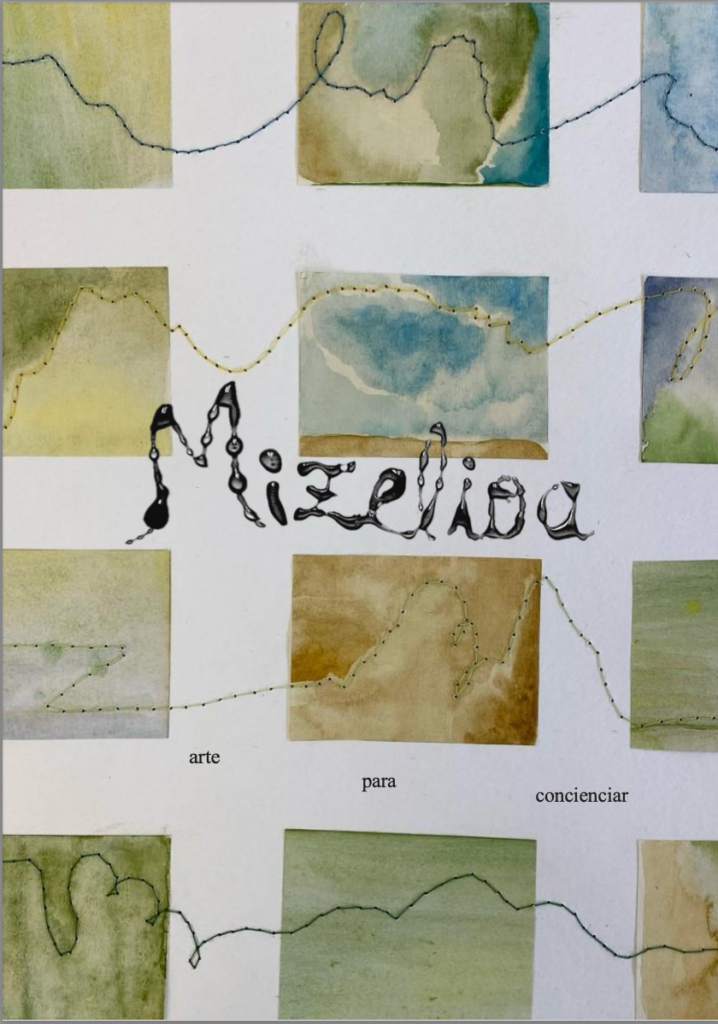
When conversations about ecology stall in abstraction, art has a way of restoring urgency. It can make invisible processes tangible and distant systems intimate. In the Basque region of Urdaibai, where a fragile biosphere meets mounting environmental pressure, the project Mizelioa set out to do precisely that. Bringing together fine arts students, early childhood educators and scientific research, the initiative explored soil, mycelium and sound as both material realities and metaphors for interdependence.
Koro Arregi Arrate, a cultural manager and consultant at DIVERSE with a strong background in collaborative and cross-disciplinary work, was part of the core team behind the project. In this conversation, she reflects on the role of art as a driver of ecological awareness, the value of art-science collaborations and the quiet networks that sustain both ecosystems and communities.
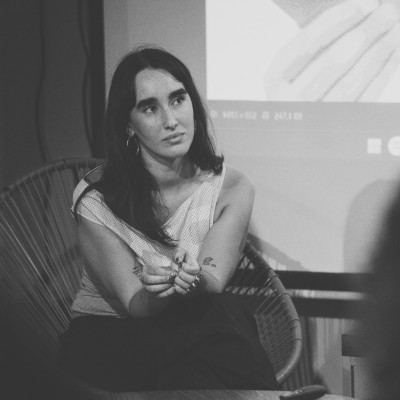
Koro Arregi Arrate, a cultural manager and consultant
Ms Arregi, looking back on your path in cultural and project work, which personal experiences and convictions do you bring to your collaboration with GAIA and to an initiative such as InteractionSeeds?
I have always believed that creativity and art are powerful tools for social and cultural transformation, and that conviction has shaped all the projects I have worked on over the past years. Whether through an art exhibition or an audiovisual piece, I have no doubt about the impact artistic expression can have in shaping ideas and shifting mindsets. With this project, we wanted to explore how the arts could help raise awareness about the importance of caring for our local biospheres and ecosystems.
What specifically prompted you to become involved in the project “Mizelioa: Art, soil and a soundscape from Urdaibai”? Was there a particular moment when you realised you wanted to help shape this initiative?
My colleagues Ane, Gorka and I, with whom I worked on Mizelioa, come from a background in open innovation methodologies, which we studied at university. There, we learned that meaningful and impactful innovation happens when diverse perspectives meet. That is why I am naturally drawn to collaborative and cross-disciplinary projects like this one. There is something deeply stimulating about working with people whose expertise differs from your own, and that curiosity made me interested in joining the Mizelioa team from the very moment the project was presented to us.
“Mizelioa” brings together art, soil ecology and soundscapes. How would you explain, in a few sentences, what this format is essentially about to someone encountering it for the first time?
As I mentioned earlier, art has historically been used to shape ideas and raise awareness around important issues. With Mizelioa, that is exactly what we set out to do. The project was developed in collaboration with more than forty students from the Faculty of Fine Arts at EHU. Their works became tools for raising awareness about the ecological challenges facing the Urdaibai biosphere, approached through artistic perspectives. At the same time, two students from the Early Childhood Education degree created a soundscape to accompany the exhibition. The resulting fanzine brings these works and their creative processes together, acting as a bridge between academic research and artistic practice.
The Urdaibai Biosphere Reserve is a very particular place. How did its landscape, history and community shape your curatorial and conceptual decisions?
Urdaibai is indeed a singular and deeply meaningful place, not least because it is a protected area with strong significance for the local community. In recent years, however, it has also faced threats from proposed ecosystem alterations aimed at replacing natural spaces within the reserve. This tension made Urdaibai a compelling starting point for Mizelioa. It allowed us to explore not only the importance of soil health, but also the broader relationship between human intervention, conservation and nature.
You work at the intersection of cultural management, consultancy and collaborative projects. How does working with researchers and scientists reshape your role as a cultural manager?
I cannot imagine working in cultural management without collaborating with people from other fields. Research-driven and scientific expertise is just as essential as the cultural and creative dimensions. One cannot exist meaningfully without the other. I find it inspiring to co-create projects where art and science intersect, because although they may appear distant at first glance, both are driven by a desire to explore, decode and shape how we experience the world. These collaborations not only strengthen the work itself but also expand the collective knowledge we can ultimately offer to society.
Art and science collaborations are often dismissed as experimental or merely “nice to have. What did you observe in Mizelioa that challenges this view?
Describing art science collaborations as “nice to have” feels overly simplistic. In my view, these initiatives play a fundamental role in reshaping how people engage with culture and knowledge. With Mizelioa, we clearly saw how the project sparked genuine curiosity among those who encountered it. Scientific content can feel intimidating to non-specialists, often because it relies on technical language and prior knowledge. When those insights are communicated through art, they become far more accessible. Art creates a narrative and an emotional entry point that helps people connect and understand. Far from diluting science, this approach amplifies it and enables audiences to engage with complex ideas on their own terms.
Soil, mycelium and sound play a central role in Mizelioa, both as metaphors and as objects of investigation. What new perspectives did this approach give you personally?
This was my first time working on a project with such a strong scientific component, and I can say without hesitation that it fundamentally changed how I understand the environment, particularly in Urdaibai. The fanzine opens with the line: “The mycelium spreads through the soil, forming invisible networks that connect ecosystems.” Before this project, I had no idea how essential mycelium is to soil health. I immediately recognised it as a powerful metaphor for the project itself. Much of what sustains our ecosystems happens quietly, without recognition, and is often overlooked. The structure of the fanzine reflects this idea, beginning with minimal spores and ending in a fertile space where ideas can ferment and transform. Through this process, I came to understand that change begins with small gestures, and that our future depends on nurturing these invisible layers of life.
Can you describe a situation where an artistic or auditory element enabled a discussion that conventional environmental education would struggle to open?
Two recent cultural works come to mind. Rosalía’s album LUX and Alauda Ruiz de Azúa’s film Los Domingos are very different artistic expressions, yet both succeeded in opening conversations that conventional communication often fails to initiate. LUX uses music and imagery to bring questions of spirituality, religion, identity and transcendence into mainstream discourse. Los Domingos tells the story of a teenage girl who chooses to become a nun, prompting reflection on emerging religious tendencies among young people. In both cases, art engages an entire generation in conversations around topics that would otherwise remain taboo.
Looking at your experience with InteractionSeeds, what conditions are necessary for art and science collaborations to become long-term practices rather than one-off flagship projects?
The uncomfortable reality is that many institutions support such initiatives out of obligation, or even as a form of greenwashing. It is crucial that they resist this impulse and instead commit to transparency, honesty and responsibility. Institutional and financial support is essential, but it must be grounded in integrity rather than appearances. Only then can we develop sustainable long-term practices instead of isolated and fragile initiatives.
If another European region wanted to launch a similar project connecting art, environmental research and local communities, which lessons from Mizelioa would you want to share?
First and foremost, it is vital to listen carefully to local voices. They often offer insights that go far beyond scientific data, revealing how people live in the region and perceive environmental challenges. At the same time, it is essential to involve experts from as many disciplines and artistic fields as possible. Multidisciplinary teams are key to innovation and originality. Finally, I would strongly recommend an intergenerational approach. Mizelioa was intentionally student-based, but I believe the project would have benefited from perspectives across age groups. The more diverse the viewpoints involved, the richer and more meaningful the outcome will be.
Mila esker…
The Mizelioa Fanzine