

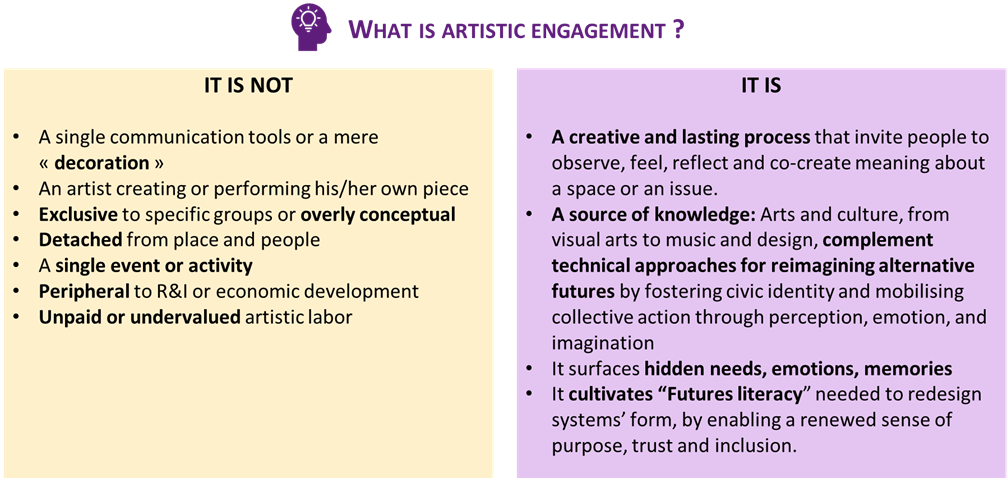
Artistic engagement is not an add-on to research and innovation projects. When implemented with intention, the collaboration between Art and Science becomes a powerful level to strengthen the societal impact of research projets and engage citizens meaningfully.
Based on two years of experimentation across Europe, InteractionSeeds partners highlight a few essential principles for replication in its Recommendations deliverable. Developed as a guide, first intended for the R&I community wishing to replicate or expand art–science–society collaborations, it summarises key guidelines to develop and implement participatory processes and public engagement methods through artistic approaches, in various context and settings.
Through InteractionSeeds, a broad palette of arts disciplines was mobilised and helped unlock new forms of dialogue, surface hidden needs, and build trust between citizens, researchers, local authorities, and industry.
In the replication guide, Art unique values are discussed together with various art forms opening different pathways to engage and involve citizens, from raising awareness to co-creating and sustaining solutions.
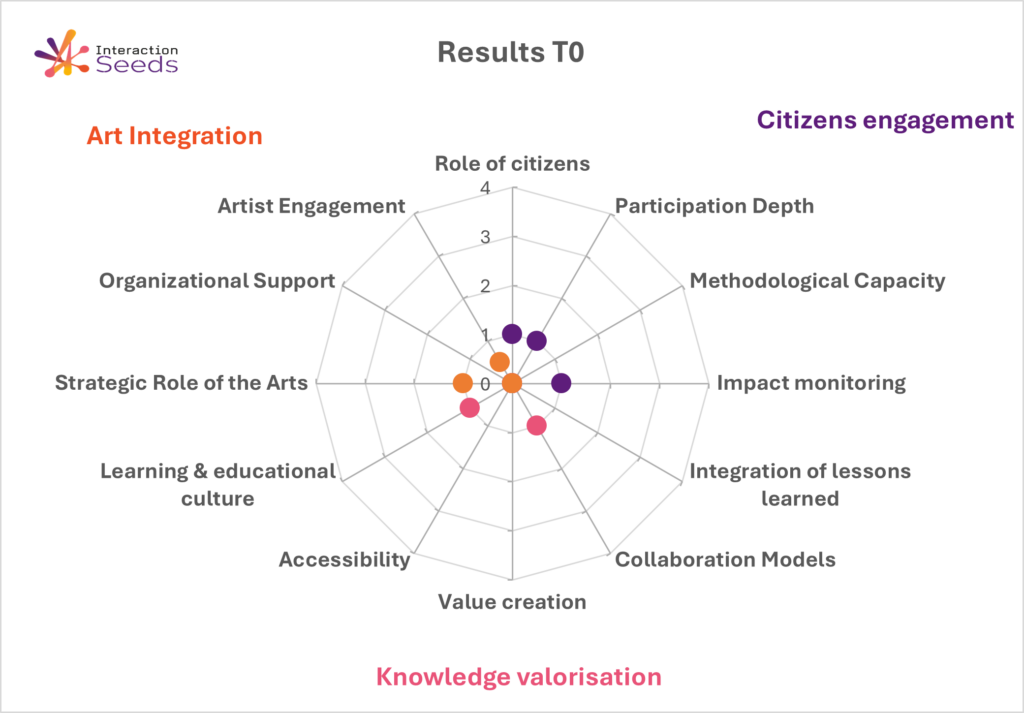
Going hand-in-hand with the replication guide, a Citizen Engagement self assessment tool has been developed to evaluate the maturity of the processes used within a project to engage with citizens and stakeholders. The tool questions the way Art is integrated in those processes and therefore enables the identification of pathways to improve citizens engagement, and to strengthen the integration of artistic approaches in a project.
This tool is intended for different types of R&I stakeholders and intermediaries running a project or a set of interventions involving citizens. It evaluates the project maturity in Citizen Engagement, the maturity in turning research results into new solutions, knowledge and skills, and the maturity in the integration of arts.
The self-assessment tool can be filled in at different times over the project duration (start, midway, and end), making it both a diagnostic and a learning tool. By visualising strengths and gaps across criteria and dimensions, project teams are helped to identify priority areas for improvement and to select the most relevant pathways for progression.
Wanting to embark on the transdisicplinary journey ? Get inspired by InteractionSeeds Success Stories.